

Navigating the complexities of new demands and opportunities for HR-IT
In today’s fast-evolving digital landscape, HR-IT transformation is not merely a trend but a necessity. HR organizations struggling with outdated and complex HR application landscapes are looking towards implementing more advanced solutions such as S/4HANA or global HR cloud software like SAP SuccessFactors, Workday, Oracle, Cornerstone or Personio. However, this transformation extends beyond the implementation of new technology as it fundamentally impacts HR processes, requiring a comprehensive overhaul of existing HR operations. One of the critical frameworks in this transformation is the HR Target Operating Model (HR TOM) ensuring the alignment between HR strategies, processes and new technological capabilities. What do you know about the HR TOM?
What is the HR TOM?
The focus of the HR organization is set to increase business value and improve the employee experience with a measurable and actionable expression of the HR strategy and value ambition serving as a guide. The binder|consulting HR TOM is a strategic framework that outlines the desired future state of HR operations. It acts as a blueprint for transforming HR functions to align with the overarching business strategy and technological advancements. An effective HR TOM provides clarity on how HR services will be delivered, who will deliver them, and how these services will be governed and measured.
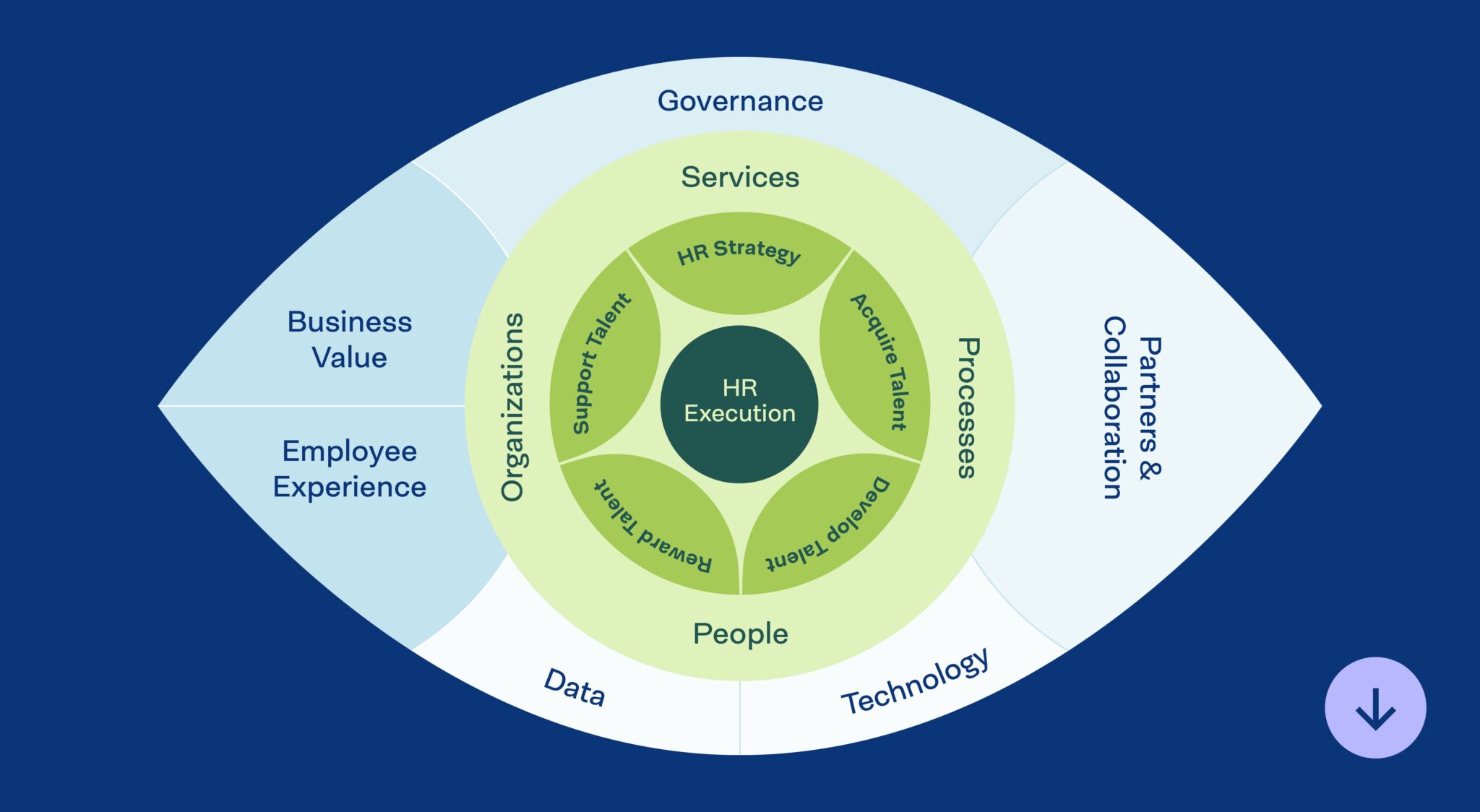
The components of HR TOM typically include:
- Services: Aligned expectations through a service catalog with clear metrics for speed, quality, and costs
- Process design: Defining end-to-end HR processes that are efficient, standardized, and scalable
- Technology integration: Modern HR technology that delivers value integrated into an effective architecture
- Data Foundation: Providing a solid foundation for fact-based decision-making and people analytics
- Organization: A tailor-made organizational model that incorporates agility and continuous change
- People: Developing future proof role definitions that bring clarity to responsibilities and skill requirements
- Partner: Establishing an effective ecosystem with professional and differentiated partner management
- Governance: Strategic alignment and structured decision-making processes involving all Stakeholders
The need for HR-IT transformations
HR organizations are under growing pressure to enhance operational efficiency, improve user experience, and provide actionable insights through advanced analytics. Outdated systems are increasingly inadequate in addressing the current demands of a global workforce and dynamic business needs. The failure to adapt can result in missed opportunities, inefficiencies, and a competitive disadvantage. Modern HR tech systems offer enhanced data integration, real-time processing, and scalable solutions tailored to the current challenges. Furthermore, with the SAP R/3 support deadline in 2027, organizations still reliant on older software releases are compelled to shift to S/4HANA or other cloud-based platforms.
Successful HR-IT transformations by designing the HR TOM first
However, the transition to new HR technologies is not just about switching software. It involves realigning processes and data structures, and the HR organization to ensure seamless integration and optimal functionality of the new technology.
This is where understanding and implementing the HR TOM becomes essential. The HR TOM streamlines operations and technology based on business value and employee experience and supports continuous adaptation to new technologies and demands. By considering all dimensions, the HR TOM helps to avoid isolated fixes and guides effective optimization. Undertaking an HR-IT transformation without first revisiting and updating the HR TOM can lead to fragmented processes, misaligned systems, and ultimately, a failure to realize the full potential of the new HR technology.
Therefore, only first revisiting and updating the HR operating model and then integrating the HR-IT transformation enables the full potential of the transformation:
Process standardization and optimization
Before implementing new technologies, it is crucial to streamline and standardize HR processes across the HR organization. HR processes must be considered end-to-end including process steps outside and inside an HR system. The HR TOM framework helps to identify inefficiencies and areas for improvement for processes end-to-end, ensuring that processes are optimized for the new system environment and fit into the HR organization.
Enhanced data governance
In order to use the advanced analytics and reporting capabilities that an HR IT transformation offers, it must first be defined which data is needed and should be analyzed. This is done with the HR TOM, which additionally establishes the required data governance frameworks that ensure data quality, consistency, and security.
Clear roles and responsibilities
In a new HR IT system roles and responsibilities must be defined along with an authorization concept. For that the role concept must be developed first in the HR TOM clarifying roles and responsibilities within the HR function. Clear authorization and accountability helps to prevent confusion and ensures smooth operation of HR processes during and after the transformation.
Improved stakeholder management
Transforming the HR IT requires involvement of stakeholders and change management. The HR TOM transformation ensures engagement of stakeholders and fostering a culture of change within the organization. This groundwork makes it easier to manage the transition to new technologies and ensures higher adoption rates among users.
Alignment with business strategy
Starting with the HR TOM ensures that HR processes and systems are aligned with the broader business strategy. When the HR operating model is designed with the business goals in mind, it becomes much easier to select and implement technologies that support these goals. Without this alignment from the start, the IT transformation risks becoming disconnected from the organization’s strategic objectives, potentially reducing its overall impact.
Navigating the transformation and embracing the future of HR
The journey towards HR transformation will look different for every HR organization, but it is a necessary step to stay competitive. By first designing the target and transforming the current HR operating model, organizations can lay a solid foundation for successful HR-IT transformation, ensuring that the new technologies deliver their promised benefits. Find out more about our solution offering of the HR TOM and HR-IT Transformation.
We have already supported many companies in their transformation journey. Contact us to find the perfect approach for your organization together!
Written by: Marie Wichmann