

In einem sich schnell wandelnden und wettbewerbsintensiven Geschäftsumfeld müssen Unternehmen ihre Strategien kontinuierlich anpassen. Das Herauslösen von Unternehmens- oder Geschäftsbereichen, die strategisch nicht mehr relevant sind, kann die Gesamtmarktposition stärken und erheblichen Wert schaffen. Erfolgreiche Portfolioanpassungen erfordern jedoch klare, gut definierte Prozesse sowie ein tiefes Verständnis der Abhängigkeiten innerhalb der Organisation.
In großen, globalen Konzernen können diese Abhängigkeiten schnell sehr komplex werden: Shared Services, geteilte Mitarbeitende („Split-Heads“) oder gemeinsam genutzte Produktionsstandorte machen verlässliche Daten zu Ressourcen, Verträgen und Finanzen oft überraschend schwer zugänglich. Dadurch entstehen Risiken wie unterschätzte Zeitpläne, Ressourcenengpässe oder unerwartete rechtliche Fallstricke.

Es ist ein bisschen wie Mikado – ein falscher Zug kann eine Kettenreaktion auslösen. Abhängigkeiten frühzeitig zu erkennen, kann daher entscheidend für den Erfolg eines Deals sein!
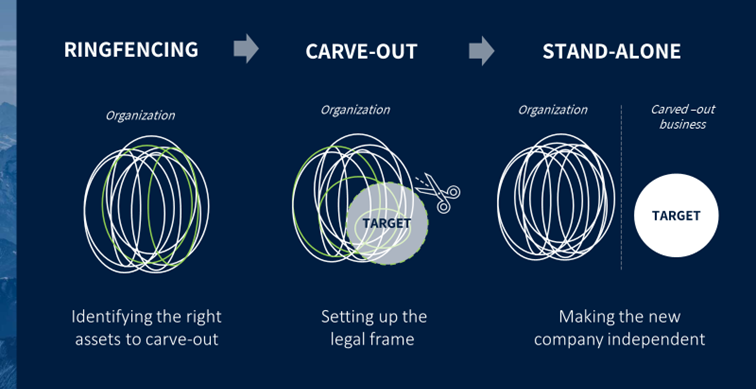
Auch wenn sich jedes Carve-out in Umfang und Komplexität unterscheidet, lassen sich drei zentrale Phasen beobachten:
- Ring-Fencing (oder Baselining): Identifikation der richtigen Vermögenswerte und Mitarbeitenden, die herausgelöst werden sollen.
- Carve-out: Etablierung des rechtlichen Rahmens für die ausgegliederte Einheit.
- Stand-alone: Befähigung der neuen Organisation zum eigenständigen Betrieb.
Über alle Phasen hinweg bleibt ein Faktor essenziell: die Menschen. Die häufige Annahme, die Rolle von HR bei einem Carve-out bestehe lediglich darin, „Mitarbeitende zu übertragen“, könnte kaum weiter von der Realität entfernt sein – insbesondere bei komplexen, grenzüberschreitenden Projekten.
Wie trägt HR zum Erfolg eines Carve-out-Projekts bei?
Dieser Blogbeitrag konzentriert sich auf die kritischen HR-Beiträge in den ersten beiden Phasen.
Phase 1: Ring-Fencing – Wer wechselt, und wie?
In der Ring-Fencing-Phase wird festgelegt, welche Mitarbeitenden dem auszugliedernden Geschäftsbereich zugeordnet sind und auf die neue Organisation übergehen. Zentrale HR-Aufgaben sind unter anderem:
- Identifikation der zu übertragenden Mitarbeitenden: Dazu gehören geschäftskritische Funktionen, Mitarbeitende in internationalen Entsendungen sowie externe Kräfte. Während „Kernteams“ meist klar identifizierbar sind, erfordern Supportfunktionen wie Finance, HR oder IT eine sorgfältige Analyse der Arbeitslastverteilung und der zukünftigen Geschäftsbedarfe.
- Festlegung der Übertragungsmethode: Der Ansatz unterscheidet sich je nach rechtlicher Einheit oder Land, da Übertritte entweder automatisch kraft Gesetzes erfolgen oder neue Arbeitsverträge erfordern können. HR muss dabei die Einhaltung gesetzlicher Vorgaben sicherstellen, Mitarbeitendenrechte wahren und rechtliche Risiken vermeiden.
- Einbindung von Arbeitnehmervertretungen: Betriebsräte oder Gewerkschaften müssen häufig innerhalb bestimmter Fristen informiert oder konsultiert werden. Wird dieser Schritt versäumt, kann dies das Projekt gefährden und den gesamten Deal negativ beeinflussen.
- Management von Vergütung und Benefits: Die Sicherstellung bestehender Ansprüche (z. B. betriebliche Altersversorgung, Urlaubstage, Boni) erfordert hohe Präzision und transparente Kommunikation, um Vertrauen und Motivation zu erhalten.
Angesichts der hohen Risiken und der rechtlichen Komplexität erfordert jeder Schritt eine exakte Planung, klare Zeitpläne und ein konsequentes Tracking.
Phase 2: Carve-out – Aufbau des rechtlichen Rahmens
Sobald die Mitarbeiterpopulation definiert ist, spielt HR eine zentrale Rolle bei der Sicherstellung der Day‑1‑Readiness. Dazu gehören:
- Arbeitsverträge: Alle Mitarbeitenden verfügen ab Day‑1 über gültige Arbeitsverträge.
- Payroll: Die Gehaltsabrechnung läuft reibungslos, alle Daten sind korrekt übertragen und erforderliche Registrierungen abgeschlossen.
- Vermögenswerte und Lizenzen: Wesentliche Geschäftsassets, Lizenzen und Arbeitsmittel sind ordnungsgemäß übertragen.
- SLAs und TSAs: Service Level Agreements (SLAs) und Transition Service Agreements (TSAs) stellen die Kontinuität während der Übergangsphase sicher. Wenn eine sofortige vollständige Eigenständigkeit nicht möglich ist, können TSAs diese Lücke effektiv überbrücken.
- Arbeitserlaubnisse: Arbeitserlaubnisse müssen auf den neuen Arbeitgeber angepasst werden – häufig ein zeitkritischer administrativer Schritt.
In dieser Phase fungiert HR als entscheidende Schnittstelle zwischen internen Funktionen sowie zwischen Käufer und Verkäufer – mit dem Ziel, Mitarbeitende zu schützen und gleichzeitig die vollständige regulatorische Compliance sicherzustellen.
Der menschliche Faktor für den Erfolg eines Carve-outs
Über Prozesse und rechtliche Rahmenbedingungen hinaus treibt HR weitere zentrale Erfolgsfaktoren globaler Carve-outs voran, insbesondere durch die Unterstützung von:
- Transparenter Kommunikation: Frühe, konsistente und ehrliche Kommunikation verhindert Gerüchte, reduziert Unsicherheit und stärkt das Engagement, indem neue Chancen aufgezeigt werden.
- Kultureller und teambezogener Sensibilität: Multinationale Carve-outs erfordern kulturelles Fingerspitzengefühl; die Einbindung lokaler Ansprechpartner schafft Vertrauen und vermeidet Verzögerungen.
- Realistischen Zeitplänen: Realistische Erwartungsmanagement verhindert Terminüberschreitungen und unnötigen Druck.
- Ausreichender Ressourcenausstattung: Sicherstellung, dass Teams in jeder Projektphase über die passenden Fähigkeiten, Kapazitäten und die notwendige Expertise verfügen.
- Flexibilität durch TSAs: Wenn operative Einsatzfähigkeit Zeit benötigt, ermöglichen TSAs einen reibungsloseren Übergang und einen sichereren Start.
- Funktionsübergreifender Abstimmung: HR hilft dabei, zentrale Abhängigkeiten zu identifizieren und zu steuern, um ein koordiniertes Vorgehen sicherzustellen.
Fazit
Ein Carve-out ist mehr als ein rechtlicher oder operativer Prozess – er ist eine Transformation, die Menschen tiefgreifend betrifft. Eine frühzeitige und wirksame Einbindung von HR verhindert Verzögerungen, minimiert Risiken und schafft die Grundlage für nachhaltigen Erfolg.
binder|consulting verfügt über umfangreiche Erfahrung in der Planung und Umsetzung von Carve-outs, Mergers und Integrationen. Unsere Expertinnen und Experten unterstützen Sie gerne bei Ihrer nächsten Transformation.
Verfasst von: Anna Maria Kling